*English version below
Van ‘bezemkast’ naar 24/7 sportknooppunt
In nog geen tien jaar tijd is het Livecentre van Gravity Media NL getransformeerd van een ‘bijzaak’ in een donkere hoek van het gebouw op het Hilversumse Media Park tot een internationaal sportknooppunt. Met eerst Ziggo Sport en nu ESPN als voorhoedespelers, een 24/7-operatie en een infrastructuur klaar voor de volgende stap in remote productie, is Livecentre stevig verbonden met de sportwereld – letterlijk én figuurlijk.
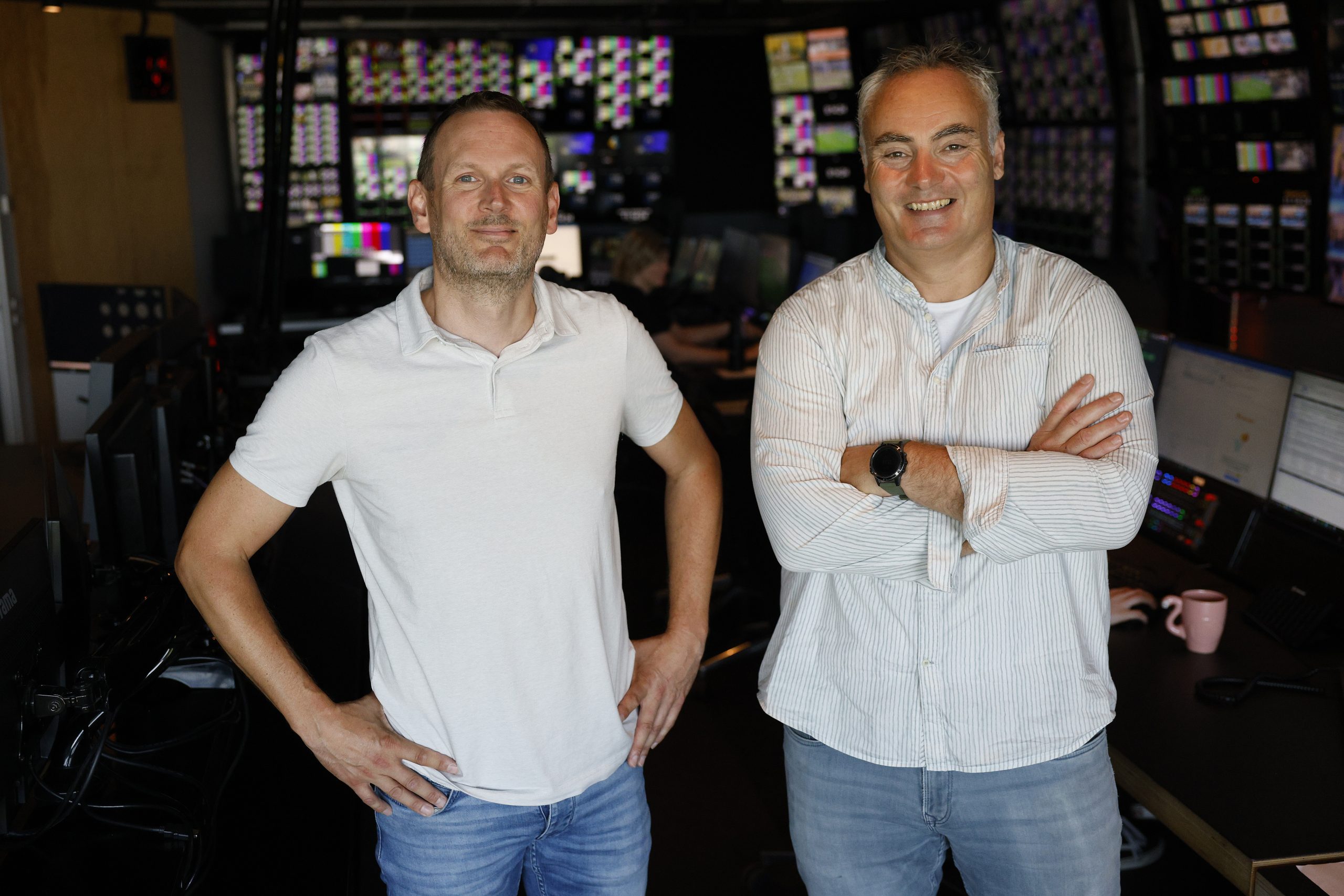
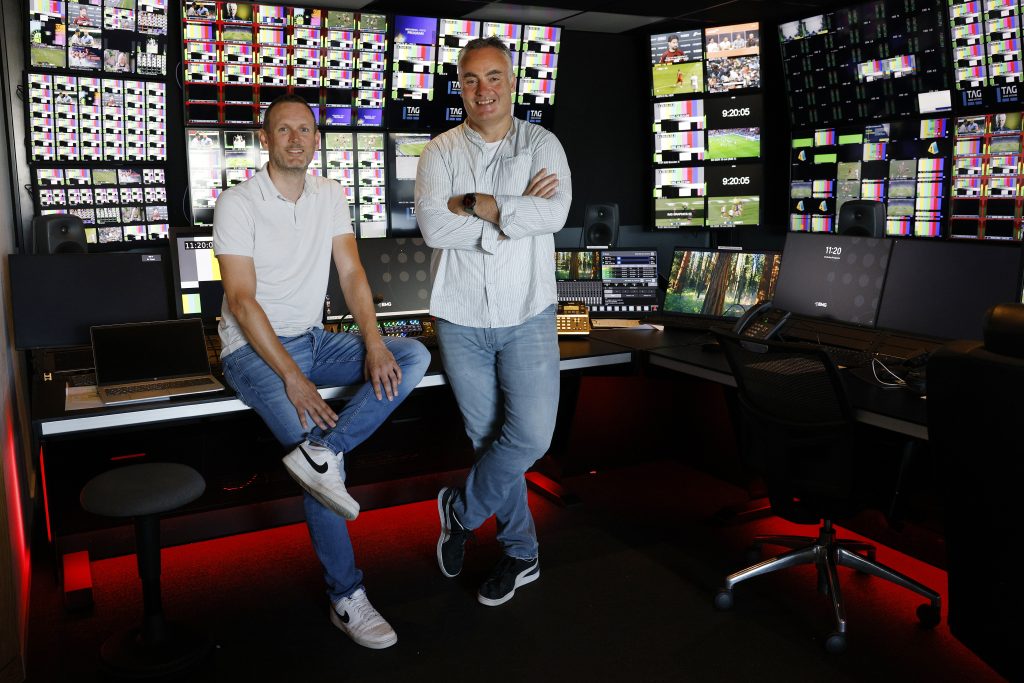
Tom Eshuis en Jasper Jurgens, respectievelijk manager Technology en projectmanager Livecentre, zijn beiden al bijna 25 jaar actief bij Gravity Media NL, voorheen EMG Nederland. Tom en Jasper werken onder andere veel samen op satellietterrein en weten nog goed hoe het allemaal begon: “In een soort bezemkast, met een halve edit set en een multiviewer voor als we keer wat live moesten doen in onze eigen studio’s of in postproductie, dan konden we dat zelf bemannen. Maar na 2019, in de coronatijd, is het echt gaan vliegen: veel livestreams gedaan, kleine remote producties en webinars, in samenwerking met Quadia toen nog (nu Motionmakers).”
“Vervolgens kwam Talpa erbij met dagelijkse programma’s, gingen we dat ook voor RTL doen en werd extra ruimte ingericht op onze Postplaza. Toen ook die te klein werd, hebben we nu misschien wel de fijnste plek van het pand. Onze mensen kunnen werken bij daglicht en hebben zicht op het weer en de schotels, altijd handig bij satellietverbindingen.”
Stepping stone
Niet lang na die verplaatsing wordt de eerste grote klant gecontracteerd: Ziggo Sport. “Dat is wel de stepping stone voor ons huidige trackrecord geweest”, beseft Jurgens. “Tot dan toe deden we voornamelijk de routering van studioproducties zoals de dagelijkse RTL Boulevard-uitzendingen en ondersteuning van file based workflows voor ENG-klanten, maar een groot contract voor sourcing, het binnenhalen van live feeds, was nieuw en onze eerste stap naar continuïteit en 24/7 bezetting. Toen we bewezen dat ook machtig te zijn, kregen we de kans om serieus mee te doen aan de ESPN-tender.”
Het binnenhalen van dat (meerjarige) contract betekent letterlijk een verdubbeling van de werkzaamheden, zowel qua mensen als middelen – onder andere driehonderd ‘afkijkplaatjes’ aan de wand. Een investering van een paar miljoen euro. Eshuis: “Ook voor ESPN zijn we de MCR en doen we de sourcing, maar dan voor alle kanalen; negen in Nederland. Veel feeds worden in Nederland geproduceerd maar zijn eigenlijk internationaal, zoals ESPN Afrika en Star Channel in China.”
Connectiviteit
De infrastructuur is hybride: satelliet én glasvezel. Livecentre is gekoppeld aan internationale knooppunten zoals BT Tower in Londen en grote MCR’s in de VS, maar dat niet alleen. Jurgens: “De connectiviteit in fiber is enorm gegroeid, ook met partijen die produceren voor ESPN én, wat het echt wel uniek maakt, we doen ook de verbindingen voor de Eredivisie en een groot deel van de KKD; dus alle stadionbeelden komen ook hier binnen.”
”Nieuwe compressietechnieken zorgen voor forse efficiëntieslag”
Binnen Gravity Media vormt Hilversum een driehoek met Gravity Media België en Londen (Westworks). Eshuis: “Zware onweersbuien bijvoorbeeld kunnen downlinks verstoren, maar dan kan een feed elders worden binnengehaald en via fiber worden doorgestuurd.” Daarnaast maken nieuwe compressietechnieken het mogelijk meerdere lijnen over één verbinding te sturen zonder zichtbaar kwaliteitsverlies – een forse efficiëntieslag. “Dat hebben we samen met ESPN uitgedacht”, aldus Jurgens. “De klant is technisch goed onderlegd en wij konden duidelijk maken hoe we het wilden doen en zij konden dat zeer waarderen.”
HDR
Met de start van het ESPN-contract gaat de zender in één klap volledig over op High Dynamic Range (HDR). Niet een paar programma’s, maar álles: studio, instarts, postproductie en distributie. Jurgens: “Voor ons was 1 juli spannend, maar voor ESPN helemaal.” Eshuis: “Wereldwijd zijn er niet veel broadcasters die zo’n ingrijpende verandering van SDR naar HDR, zonder uitzonderingen, aandurven; erg ambitieus en stoer vind ik. En dat zie je ook, de kwaliteit spat van het scherm.”
Voor de kijker betekent het levendigere kleuren en meer detail. Fluorescerende shirts zijn ook écht fel, contrastverschillen blijven zichtbaar, ook in de schaduw blijft detail behouden. “ESPN besteedt ook veel aandacht aan quality control, er zijn daadwerkelijk HDR supervisors die remote met de voetbalwedstrijden meekijken om te zorgen dat het allemaal matcht”, vult Eshuis aan. Sport die nog niet in HDR wordt aangeleverd, zoals Amerikaans honkbal, wordt in Hilversum realtime geconverteerd, compleet met correcte metadata.
diPloy
Technisch draait het Livecentre volledig op SMPTE ST 2110: gescheiden transport van video, audio en metadata over IP, met perfecte synchronisatie. Ideaal voor schaalbaarheid, maar in een 24/7-omgeving vraagt het om redundantie en slimme workflows. Daarvoor is er diPloy: een in-house ontwikkeld modulair, IP-based systeem waarin control, audio, video, intercom, monitoring en data samenkomen. Een vijfkoppig diPloy-team werkt letterlijk onder het Livecentre en levert maatwerktools en dagelijks support.
“Binnen Gravity Media is de koers duidelijk: steeds minder grote regiewagens op locatie”
Gravity Media NL beheert ook de volledige intercomstructuur tussen ESPN en de eindregie. Live commentaar uit binnen- en buitenland – of dat nu een Engelse voice-over is of een Franse veldrijcommentator – wordt via low-delay monitoring en strakke synchronisatie in de uitzending gebracht. Die mix van video, audio en communicatie maakt het Livecentre tot een breed inzetbare hub, zowel voor bestaande klanten als voor toekomstige remote producties.
Remote productie
Want dat is de toekomst, beseffen ook Jurgens en Eshuis: “Binnen Gravity Media is de koers duidelijk: steeds minder grote regiewagens op locatie. Dus steeds meer centrale regies via stabiele verbindingen, om zo alle locaties in de landen aangesloten te krijgen zodat we moeiteloos remote producties kunnen faciliteren in heel Europa of uiteindelijk wereldwijd als dat nodig is. We kunnen dat uncompressed met de hoogste kwaliteit feeds, maar ook via gecomprimeerde verbindingen voor bijvoorbeeld kleinere sporten.”
Livecentre speelt daarin een grote rol en die zal alleen maar crucialer worden, beseffen beiden. “Onze ruimte is modulair ingericht: alles kan verplaatst of verwijderd worden om ruimte te maken voor uitbreiding. En dat is waarschijnlijk geen overbodige luxe. De vraag groeit en de kans is groot dat we in de komende jaren opnieuw moeten opschalen.”
Tekst: Jeroen te Nuijl // Fotografie: Studio Kastermans
ENGLISH VERSION BELOW
